Integrative bodywork
rooted in osteopathic principles
What is it?
This is not massage.
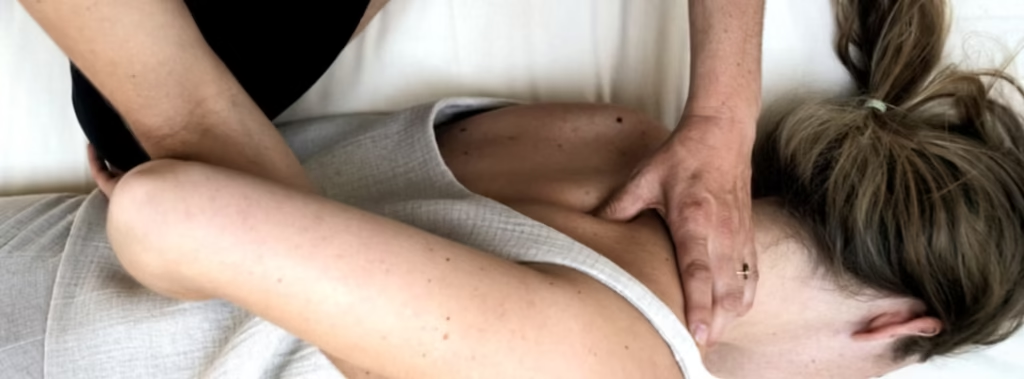
This approach looks at the body as a whole _ how everything inside is connected, and how tension or restriction in one area can quietly affect another part entirely.
Osteopathic principles guide my work: rather than chasing a single symptom, the aim is to understand what’s actually going on underneath it, and help the body find its own way back to balance.
In a session, I might work with :
- muscles, joints, and skeletal structure,
- as well as the mobility of your internal organs ( visceral work),
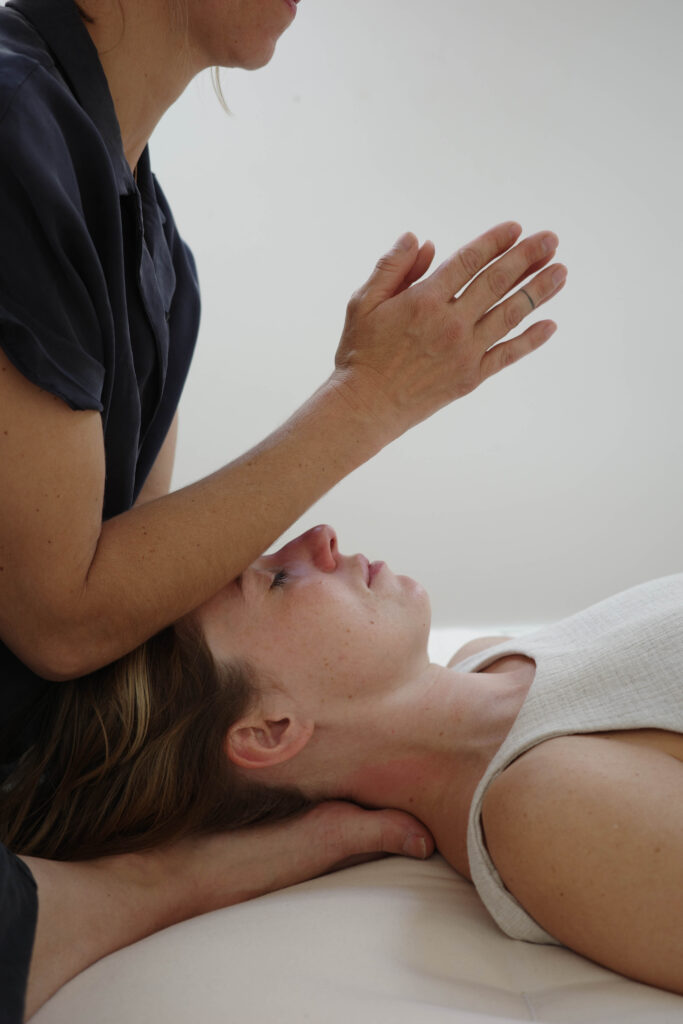
- your craniosacral rhythm
- the fascia (the connective web that runs through and links everything in the body. ) - your nervous system(helping the shift out of stress response)
- your hormonal and endocrine balance
- or digestive tension
The idea is simple: the body works as one system, not separated parts. A restriction in the hip, for instance, can be tied to an old pattern in the shoulder, or a shift in breathing can echo through the digestive system. Rather than isolating each complaint, this approach follows those connections, working with the body’s own rhythms and its natural capacity to self-regulate.
Who is it for?
Suitable for everyone, from newborn to elderly. Anyone whose body needs a little help finding its balance again.
- A stiff neck that won’t loosen up,
- a stomach that feels tight after a stressful week,
- a lower back that’s been achy since a fall years ago,
- headaches that seem to come out of nowhere,
- Tension and symptoms in the jaw ( brunxism, masticatory disorders, etc) - trouble sleeping, or simply a feeling of being “stuck” somewhere in the body.
- Some people because they’re pregnant and adjusting to a changing body. - Others come after surgery, to help the body reorganize itself.
- Some are athletes recovering between events,
- some are simply curious to feel better in their own skin.
For children,
Babies and children can benefit too.
A newborn’s skull and body go through a lot during birth, and some babies carry tension from that _ showing up as trouble feeding, difficulty settling, or a preferred way of turning their head. Gently, careful work can help ease that.
Older children sometimes come during orthodontic treatment, since the position of the jaw and skull can affect _ and be affected by the rest of the body, and integrative bodywork rooted in osteopathy can be a follow up alongside an orthodontist to support and ease the process.
Children recovering from a fall, a surgery, or simply going through a growth spurt can also benefit from a session to help the body settle and reorganize.
Osteothai massage
What is it?
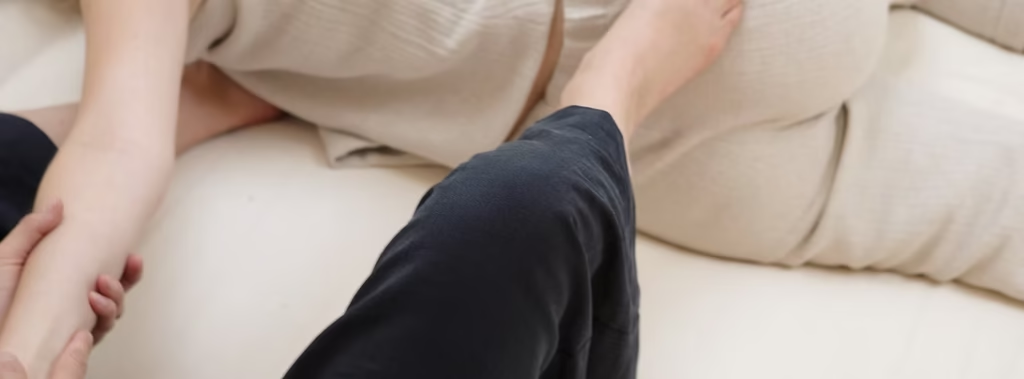
Osteothai combines traditional Thai massage techniques with a precise and gentle touch of osteopathy. While Thai massage will work through powerful stretches, rhythmic rocking and acupressure points on the energy lines of the body. The osteopathic techniques chosen in the treatment will permit a more precise work on structural and joint mobility as well as helping in releasing tissue and muscular tensions.
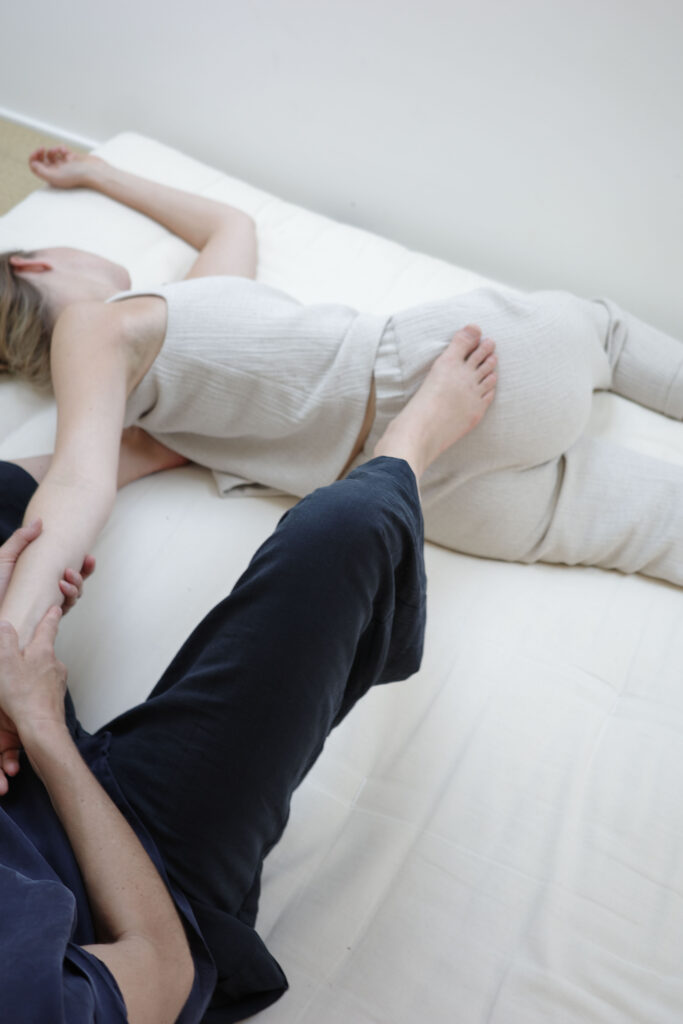
The masseuse uses her hands, feet, knee and elbow with attention given to the whole body, from head to toe, not just from the area that hurts. Each treatment is different, adapting to the needs of the person.
Osteothai massage takes place on a comfortable mat, without the use of oil. The customer is dressed in loose and flexible clothing.
All you have to do is lying down and relax.
Benefits
- Produces deep relaxation of body & mind
- Decreases tension, stress
- Reduces body aches such as headaches,, back pain, neck or shoulder muscular tightness, insomnia, nervous imbalance
- Improves joint mobility, flexibility and body posture
- Improves blood & lymph circulation and neurological functions
- Improves digestion
- Release muscle tension
- Supports medical treatment (recommended for recovery and aftercare injuries)